John D. Rockefeller (born July 8, 1839, Richford, New York, U.S.—died May 23, 1937, Ormond Beach, Florida) was an American industrialist and philanthropist who founded the Standard Oil Company, which dominated the oilindustry and was the first great U.S. business trust. He is the major historical figure behind the famed Rockefeller family and widely considered the richest American and biggest philanthropist in history.
Al Capone (born January 17, 1899, Brooklyn, New York, U.S.—died January 25, 1947, Palm Island, Miami Beach, Florida) was an American Prohibition-era gangster who dominated organized crime in Chicago from 1925 to 1931 and became perhaps the most famous gangster in the United States.
As the head of the government of the United States, the president is arguably the most powerful government official in the world. The president is elected to a four-year term via an electoral college system. Since the Twenty-second Amendment was adopted in 1951, the American presidency has been limited to a maximum of two terms.
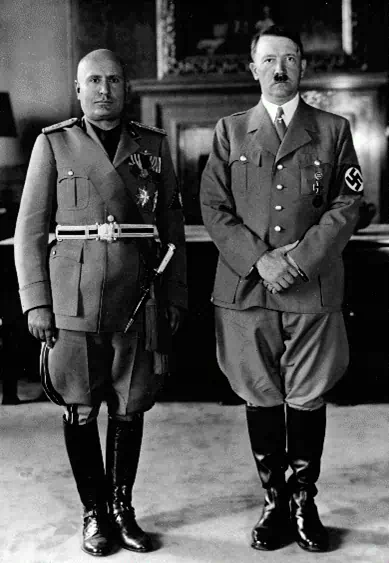
Fascism, political ideology and mass movement that dominated many parts of central, southern, and eastern Europe between 1919 and 1945 and that also had adherents in western Europe, the United States, South Africa, Japan, Latin America, and the Middle East. Europe’s first fascist leader, Benito Mussolini, took the name of his party from the Latin word fasces, which referred to a bundle of elm or birch rods (usually containing an ax) used as a symbol of penal authority in ancient Rome. Although fascist parties and movements differed significantly from one another, they had many characteristics in common, including extreme militaristic nationalism, contempt for electoral democracy and political and cultural liberalism, a belief in natural social hierarchy and the rule of elites, and the desire to create a Volksgemeinschaft (German: “people’s community”), in which individual interests would be subordinated to the good of the nation. At the end of World War II, the major European fascist parties were broken up, and in some countries (such as Italy and West Germany) they were officially banned. Beginning in the late 1940s, however, many fascist-oriented parties and movements were founded in Europe as well as in Latin America and South Africa. Although some European “neofascist” groups attracted large followings, especially in Italy and France, none were as influential as the major fascist parties of the interwar period.
Political science, the systematic study of governance by the application of empirical and generally scientific methods of analysis. As traditionally defined and studied, political science examines the state and its organs and institutions. The contemporary discipline, however, is considerably broader than this, encompassing studies of all the societal, cultural, and psychological factors that mutually influence the operation of government and the body politic.
World War II, conflict that involved virtually every part of the world during the years 1939–45. The principal belligerents were the Axis powers—Germany, Italy, and Japan—and the Allies—France, Great Britain, the United States, the Soviet Union, and, to a lesser extent, China. The war was in many respects a continuation, after an uneasy 20-year hiatus, of the disputes left unsettled by World War I. The 40,000,000–50,000,000 deaths incurred in World War II make it the bloodiest conflict, as well as the largest war, in history.
The United States Military Academy (USMA), established in 1802, is renowned for producing exceptional leaders. Situated in West Point, New York, the academy was initially founded by President Thomas Jefferson to train officers for the rapidly expanding army. Throughout its history, West Point has evolved, adapting to the changing needs of the nation’s defense. USMA has consistently upheld its mission of educating, training, and inspiring cadets to become leaders of character, prepared to serve their country with honor and distinction. USMA’s rich history links its graduates as part of the Long Gray Line, and those graduates have played an integral part in the nation’s history.
United States, country in North America, a federal republic of 50 states. Besides the 48 conterminous states that occupy the middle latitudes of the continent, the United States includes the state of Alaska, at the northwestern extreme of North America, and the island state of Hawaii, in the mid-Pacific Ocean. The conterminous states are bounded on the north by Canada, on the east by the Atlantic Ocean, on the south by the Gulf of Mexico and Mexico, and on the west by the Pacific Ocean. The United States is the fourth largest country in the world in area (after Russia, Canada, and China). The national capital is Washington, which is coextensive with the District of Columbia, the federal capital region created in 1790.
American Dream, ideal that the United States is a land of opportunity that allows the possibility of upward mobility, freedom, and equality for people of all classes who work hard and have the will to succeed.
The roots of the American Dream lie in the goals and aspirations of the first European settlers and colonizers. Most of these people came to the North American continent to escape tyranny, religious and political persecution, or poverty. In 1776 their reasons for coming were captured by the Founders in the Declaration of Independence: “We hold these truths to be self-evident, that all men are created equal, that they are endowed by their Creator with certain unalienable Rights, that among these are Life, Liberty and the pursuit of Happiness.” These lines have often been cited by groups seeking equal standing in American society.
California Gold Rush, rapid influx of fortune seekers in California that began after gold was found at Sutter’s Mill in early 1848 and reached its peak in 1852. According to estimates, more than 300,000 people came to the territory during the Gold Rush.
Jacob Riis (born May 3, 1849, Ribe, Denmark—died May 26, 1914, Barre, Massachusetts, U.S.) was an American newspaper reporter, social reformer, and photographer who, with his book How the Other Half Lives (1890), shocked the conscience of his readers with factual descriptions of slum conditions in New York City.
This article has three basic purposes: (1) to provide an overview of the history of philosophy in the West, (2) to relate philosophical ideas and movements to their historical background and to the cultural history of their time, and (3) to trace the changing conception of the definition, the function, and the task of philosophy.
Throughout history, art and social movements have always been connected. If we look back, we see that art has a powerful role in shaping and showing the stories of society. Artists, like Diego Rivera during the Mexican Revolution or those making posters for civil rights, have always used their creativity to reflect the times they lived in.
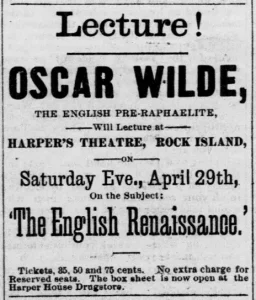
Aestheticism, late 19th-century European arts movement which centred on the doctrine that art exists for the sake of its beauty alone, and that it need serve no political, didactic, or other purpose.
The movement began in reaction to prevailing utilitarian social philosophies and to what was perceived as the ugliness and philistinism of the industrial age. Its philosophical foundations were laid in the 18th century by Immanuel Kant, who postulated the autonomy of aesthetic standards, setting them apart from considerations of morality, utility, or pleasure. This idea was amplified by J.W. von Goethe, J.L. Tieck, and others in Germany and by Samuel Taylor Coleridge and Thomas Carlyle in England. It was popularized in France by Madame de Staël, Théophile Gautier, and the philosopher Victor Cousin, who coined the phrase l’art pour l’art (“art for art’s sake”) in 1818.
Cathedral, in Christian churches that have an episcopal form of church government, the church in which a residential bishop has his official seat or throne, the cathedra. Cathedral churches are of different degrees of dignity. There are cathedral churches of simple diocesan bishops, of archbishops or metropolitans, of primates, patriarchs, and, in the Roman Catholic Church, of the pope. A cathedral church is not necessarily large and magnificent, although most cathedrals have become so. Since the territorial organization of the early church followed that of the Roman Empire, cathedrals from the first were established wherever possible in towns, not in villages. In the early European Middle Ages, the town in which a cathedral church was situated became known as the cathedral city.
Tomb, in the strictest sense, a home or house for the dead; the term is applied loosely to all kinds of graves, funerary monuments, and memorials. In many primitive cultures the dead were buried in their own houses, and the tomb form may have developed out of this practice, as a reproduction in permanent materials of primeval house types. Thus prehistoric tomb barrows were usually built around a round hut, in which the body was placed, along with tools and other personal effects for use in the next life. With the more advanced technology of early civilizations, brick and stone tombs appeared, often of great size, but still preserving primitive house forms. They were sometimes domical and sometimes rectangular, depending on which form was in common domestic use when the tombs began to be built. Being thought of as houses, such tombs were often lavishly provided with clothes, utensils, and furniture, so that they are major sources of knowledge about the cultures that built them.
Abolitionist literature refers to a body of written works that emerged in the 18th and 19th centuries, aimed at opposing slavery and advocating for its abolition. This genre includes essays, novels, poems, and pamphlets that expose the injustices of slavery, inspire activism, and promote social change. Through powerful storytelling and rhetorical strategies, abolitionist literature played a critical role in shaping public opinion and mobilizing support for the abolitionist movement.
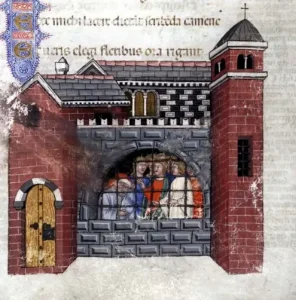
Prison literature is the literary genre of works written by an author in unwilling confinement, such as a prison, jail or house arrest. The writing can be about prison, informed by it, or simply incidentally written while in prison. It could be a memoir, nonfiction, or fiction.
A war novel or military fiction is a novel about war. It is a novel in which the primary action takes place on a battlefield, or in a civilian setting (or home front), where the characters are preoccupied with the preparations for, suffering the effects of, or recovering from war. Many war novels are historical novels.
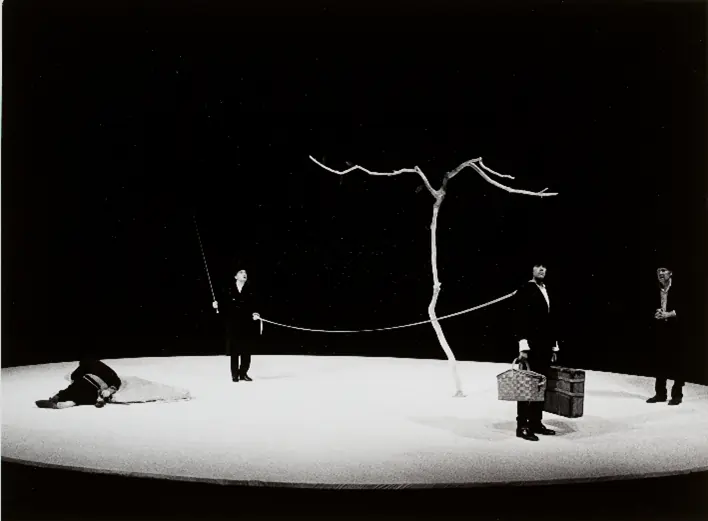
Theatre of the Absurd, dramatic works of certain European and American dramatists of the 1950s and early ’60s who agreed with the Existentialist philosopher Albert Camus’s assessment, in his essay “The Myth of Sisyphus” (1942), that the human situation is essentially absurd, devoid of purpose. The term is also loosely applied to those dramatists and the production of those works. Though no formal Absurdist movement existed as such, dramatists as diverse as Samuel Beckett, Eugène Ionesco, Jean Genet, Arthur Adamov, Harold Pinter, and a few others shared a pessimistic vision of humanity struggling vainly to find a purpose and to control its fate. Humankind in this view is left feeling hopeless, bewildered, and anxious.
Modernist literature, the body of written works produced during Modernism, a period of experimentation in the arts from the late 19th to the mid-20th century, particularly in the years following World War I (1914–18). Modernist literature developed throughout Europe, the United States, and Latin America. This article discusses the principal characteristics of Modernist literature as well as some leading Modernist writers and developments within the larger movement. For further discussion about the movement itself, including Modernist visual art, music, dance, and architecture, seeModernism.